Hidden Trade Show Costs Nobody Budgets For (and How to Plan Around Them)
· By admin · Event Technology, Event Planning Tips
Most exhibitor budgets start with the booth space, the structure, and the graphics. Those line items are visible, and they feel complete. Then the exhibitor service kit arrives, the freight bills show up, and the post-show invoices tell a different story.
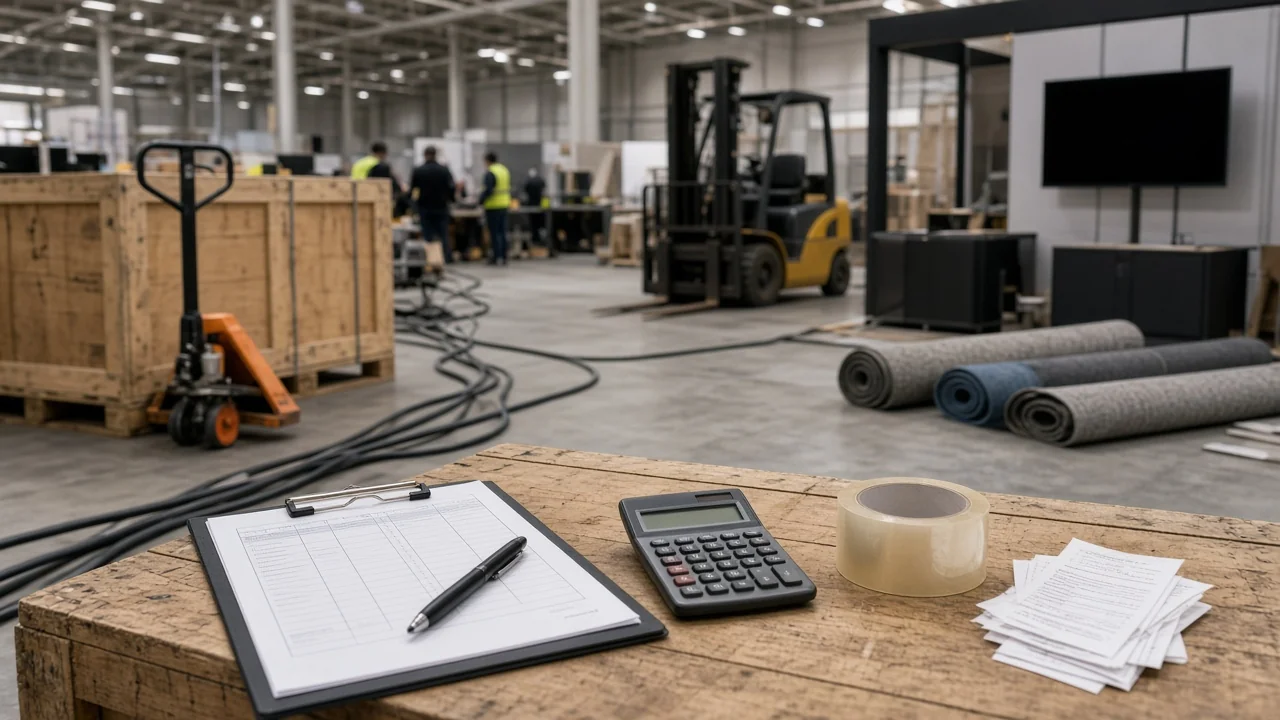
Hidden trade show costs are rarely one dramatic surprise. They are a stack of smaller charges (material handling, labor windows, power drops, late fees, outbound freight paperwork, and the odd roll of carpet tape bought on the show floor) that quietly push the total past what finance approved.
This Convention Vendor guide is for U.S. exhibitors and planners who want a practical way to see those costs before move-in. Use it as a planning checklist alongside your show’s exhibitor service kit and the general service contractor’s rate card (common contractors include Freeman and GES, among others). Rates, deadlines, and labor rules vary by venue and contractor, so treat the published forms for your show as the source of truth.
Why the booth quote rarely covers the full bill
A fabrication or rental booth quote often covers design, structure, and graphics. It usually does not cover how freight moves from the dock to your space, who installs it, how empty crates are stored, or what the venue charges for power and internet.
Those services sit with other vendors: the general service contractor (GSC), the building electrician, the official internet provider, the freight carrier, and sometimes a local labor pool. Each has its own forms, deadlines, and overtime rules. When ownership of those forms is unclear, costs multiply.
Drayage and material handling: how the bill is usually built
Drayage, often labeled material handling in the exhibitor kit, is not the same as shipping. Shipping gets your freight to the advance warehouse or the show site. Material handling covers moving that freight from the receiving point to your booth, removing empties, and returning empties at teardown.
At many U.S. shows, material handling is billed by weight. Kits commonly describe rates in hundredweight (CWT) terms, one CWT equals 100 pounds, and may note other methods. Check your show’s exhibitor service kit and the GSC rate card for the method, tiers, rounding, and any per-shipment minimums that apply to you. Several light boxes can cost more to handle than one well-packed crate of the same total weight.
Expect the kit to distinguish how freight is packed and when it arrives:
- Crated or skidded freight is usually easier (and often cheaper to handle) than loose or uncrated pieces.
- Uncrated, loose, or improperly packaged items may trigger special handling or a higher rate class, check the kit definitions.
- Oversized, pad-wrapped, or fragile pieces can fall into a special-handling category with its own surcharge language.
- Deliveries outside the published receiving window, or that force overtime crews, can add late or overtime material-handling charges. Read the kit for the receiving windows and surcharge language that apply to your show.
Before you ship, weigh and measure every piece, label crates clearly, and consolidate when you can. For labels, deadlines, and how freight typically moves into a venue, see Convention Vendor’s shipping-to-convention-centers guide: https://www.conventionvendor.com/guides/shipping-to-convention-centers
Advance warehouse vs. direct-to-show-site shipping
Most shows offer two inbound paths: advance warehouse and direct to show site. Advance warehouse usually means delivery to the GSC warehouse before the show, then move-in delivery to your booth. Direct-to-show-site means freight arrives at the venue during the published move-in window.
Neither path is automatically cheaper. Advance warehouse can buy schedule flexibility, but storage and handling remain billable per the kit. Late advance-warehouse freight often picks up added handling charges after published cutoffs. Direct-to-site works when timing is precise, and gets expensive if the truck misses the window or forces overtime while your crew waits. Compare both rate columns in the kit.
If you are also bringing rented booth gear, plan it on the same freight calendar as the rest of your exhibit. Renting does not avoid union, drayage, storage, electrical, internet, or venue location fees. Those are billed by the show under the exhibitor kit or prospectus, and they are not included in typical rental quotes (including Rentacomputer.com quotes to convention venues). Budget them for rented equipment the same way you would for exhibitor-owned crates, follow the same labels and receiving deadlines, and schedule venue labor for delivery, install, and teardown windows so long waits do not add delivery, pickup, or wait charges.
Empty-container storage during the show
Once your booth is built, empty crates usually cannot stay in the aisle or booth footprint. The GSC typically removes empties, stores them during the show, and returns them at teardown. Whether empty storage is bundled into material handling or listed separately varies by show, check your kit and GSC rate card.
Practical tip: number crates, photograph contents before sealing, and keep a simple crate map with your booth captain. Faster reclaim at teardown means less paid waiting on outbound labor and freight.
Installation and dismantle labor, local rules, and overtime windows
Installation and dismantle (I&D) labor is another place budgets slip. Who may install what, and under which rate categories, depends on the venue, the city, and the rules published for that show. Do not assume last year’s rules in another city still apply. Confirm labor categories and rate windows in the exhibitor service kit and with the GSC.
Cost drivers to plan for:
- Straight-time vs. overtime vs. double-time windows (for example evenings, weekends, or holidays, exact windows are in the kit).
- Crew-size or call-time minimums, when the kit publishes them.
- Waiting time when freight, power, or another trade is late.
- Floor changes that require rework after the primary install window.
Clear drawings, labeled hardware kits, and a realistic install schedule reduce paid idle time. If the booth needs electrical or data before graphics go up, sequence those orders so crews are not standing by on the clock.
Electrical and internet orders, and the late / on-site jump
Power is rarely “one outlet.” Kits often price electrical service by amperage, number of drops, placement, and whether labor is needed to connect equipment. Lighting, monitors, lead-capture devices, chargers, and demos all add load. Order what the booth will actually use, and place outlets on the floor plan so you are not buying last-minute extensions on site.
Internet is similar. Shared venue Wi-Fi may be fine for email; cloud demos and lead sync often need more. Advance orders are usually priced on a different schedule than on-site rush orders, compare both columns in your kit. When connectivity is mission-critical, budget a backup path, more on booth tech rentals below.
Late-order surcharges and early-bird deadlines
Exhibitor kits almost always publish early-bird or advance-order deadlines for furniture, electrical, internet, cleaning, rigging, and material handling. Miss the date, and the same item can move to a standard or on-site rate. For common ordering-timing questions, see the Convention Vendor FAQ: https://www.conventionvendor.com/faq
Build an internal deadline ahead of every official kit date and assign an owner to each form. “We will decide on site” is one of the most expensive habits on the show floor.
Freight problems that create more freight costs
Inbound freight that misses the targeted move-in window can trigger storage, redelivery, special handling, or overtime labor while your install crew waits. Outbound is equally fragile: after a long show, crates return at different times, bills of lading get rushed, and the hall wants the floor cleared.
Before anyone leaves the booth at close:
- Confirm the outbound carrier and pickup window.
- Complete and retain outbound paperwork (bill of lading / shipping documents) required by the show.
- Match crate counts to the outbound manifest.
- Photograph sealed crates and keep copies of labels and paperwork with the booth captain.
Forgotten outbound paperwork is a classic post-show cost: freight sits, storage accrues, and someone pays for a scramble. Treat teardown paperwork with the same seriousness as the booth renderings.
Small on-site buys that quietly add up
Not every overrun is a five-figure invoice. Teams often end up buying tape, cables, last-minute signage, carpet padding, or cleaning supplies at show-floor prices.
Pack a labeled show kit with the consumables you used at the last two events. It is unglamorous, and usually cheaper than a sundries run on install day.
Lead retrieval device fees
Many shows offer an official lead-retrieval device or app, with options listed in the kit. Some teams use the official scanner; others capture leads on tablets. Budget the method early and pull current fees from your show’s exhibitor service kit, not last year’s notes.
Booth technology without buying for one show
Laptops for demos, monitors for looping video, iPads for lead capture, chargers, and hotspots or backup internet are easy to under-budget, or to overbuy for a three-day floor. For a practical rental path on booth tech, see trade show technology rentals at Rentacomputer.com: https://www.rentacomputer.com/rentals/events/trade-shows. Rental quotes to convention venues do not cover union, drayage, storage, electrical, internet, or location fees; the client remains responsible for those show charges. Practical tip: when you rent booth tech, check the exhibitor prospectus and line up venue or union labor for delivery, install, and teardown windows, because missed windows or long waits can add delivery, pickup, or wait charges.
Add a 10-15% contingency line
As common planning guidance, not a universal rule, many exhibit teams set aside about 10-15% of the total trade show budget for surprises such as labor overruns, freight issues, a rush graphic, or a schedule change. Scale up for complex booths, first-time shows, or tight install windows.
Contingency is not permission to skip the kit. It is insurance for variables you cannot fully control once the truck is sealed.
How to plan around hidden trade show costs
Use this sequence on every show:
- Read the exhibitor service kit and the GSC rate card as soon as they are posted. Highlight material handling, labor, electrical, internet, cleaning, lead retrieval, and every advance-order deadline.
- Build a line-item budget that separates booth/space, graphics, inbound freight, material handling, I&D labor, venue services, lead capture, travel, and contingency.
- Set internal order deadlines earlier than the kit’s early-bird dates, with a named owner for each form.
- Choose advance warehouse vs. direct-to-site based on install timing, not habit.
- Pack a show kit for small consumables so you are not buying them on site.
- After the show, track actuals against every line within two weeks, while invoices are still fresh, and update your template for the next event.
The teams that finish close to budget treat the exhibitor kit like a contract, price the boring logistics early, and leave a modest contingency for the rest.
Plan the full picture before you approve the booth
Hidden trade show costs show up when logistics, labor, and venue services are treated as afterthoughts. Pull those lines into the first budget conversation, read the kit early, and give every form an owner.
FAQ
What is drayage at a trade show?
Drayage (often called material handling) is the service that moves your freight from the advance warehouse or show dock to your booth, stores empty containers during the event, and returns those empties at teardown. It is separate from the carrier shipping charge that got the freight to the city.
How is material handling usually billed?
Many U.S. shows describe material handling as a weight-based charge, often in hundredweight (CWT) terms, on the exhibitor service kit and the GSC rate card (for example Freeman or GES). Kits may also note shipment minimums and different rate classes for crated, uncrated, or special-handling freight. Use the method published for your show.
Should I ship to the advance warehouse or direct to show site?
Choose based on your install window and risk tolerance. Advance warehouse can add flexibility; direct-to-site can work when timing is precise. Compare both rate columns and receiving rules in the kit. Late advance-warehouse arrivals often pick up added handling charges after published cutoffs.
Why do electrical and internet cost more on site?
Shows typically publish lower advance-order rates and higher standard or on-site rates for the same services. Order early when the booth plan is stable, and skim the Convention Vendor FAQ (https://www.conventionvendor.com/faq) for common timing questions.
How much contingency should I add to a trade show budget?
As common planning guidance, many teams reserve about 10-15% of the total trade show budget for unexpected labor, freight, or venue-service needs. Increase the reserve for first-time shows, complex builds, or tight install schedules.
Where can I rent booth technology instead of buying it for one show?
For short-term booth laptops, monitors, tablets for lead capture, chargers, and backup connectivity, review trade show technology rentals at Rentacomputer.com (https://www.rentacomputer.com/rentals/events/trade-shows). Rented gear does not avoid union, drayage, storage, electrical, internet, or venue fees; those stay with the exhibitor under the show kit. Check the exhibitor prospectus to schedule venue labor for delivery, install, and teardown of the rental equipment so missed windows or long waits do not add delivery, pickup, or wait charges.